
Compare cheap car hire at Geneva Airport’s Swiss side: real prices, which desk to use for Avis, Sixt, Europcar and more, and how to avoid hidden fees.

“Cheap” and “Swiss side” are two different questions, and most guides only answer one of them. This page covers both: whether you even need a car for a Geneva city stay, where the Swiss-side desks actually are, which supplier to head for once you land, real prices by category, and the specific fees and counter upsells that turn an advertised “cheap” quote into a much bigger bill.
Do You Actually Need a Car?
Worth asking before you book anything. The train from Geneva Airport to the central station, Genève-Cornavin, takes about 6 to 7 minutes and costs CHF 3 (roughly £2.75), with trains running every 10 to 15 minutes from just after 5am to around midnight. If your trip is Geneva city only, that’s cheaper and faster than picking up a car, parking it, and paying city parking rates for days you won’t use it. Where a car earns its cost is once you’re leaving the city: ski resorts, the French Alps, or a lake-side road trip that public transport doesn’t cover well.
One Airport, Two Countries
Geneva Airport sits on the Swiss-French border. All international arrivals land on the Swiss side. A separate route through the terminal leads to Secteur France, used mainly for French domestic arrivals. The signage tells you which one you want: follow “Rental Car” or “Location Voiture” for the Swiss sector, or “French Sector” and “Gate F” if your booking is on the French side. If you land on the Swiss side but booked French, you’ll need a same-day boarding pass to cross the internal security point, or you’ll have to walk round via the public road instead.
Compare against the other option: car hire Geneva Airport French side.
How to Actually Get the Cheapest Rate
The advertised daily rate and the total you pay at the counter are often two different numbers. What actually moves the gap:
- Unlimited mileage beats a lower headline rate. A slightly higher daily price with unlimited mileage is usually cheaper overall than a capped rate, once you factor in a border crossing or a ski resort trip.
- Prepay saves money, pay-later saves flexibility. Prepaid rates are typically the lowest quoted, but usually non-refundable. If your plans could shift, a slightly higher pay-at-pickup rate can work out cheaper than losing a prepaid booking outright.
- The deposit isn’t the price, but it affects your trip. Even an economy category needs a credit card hold, commonly £250 to £800 depending on the car and supplier. Debit cards are rarely accepted for this, so confirm the card requirement before you fly.
- One-way fees can erase the saving. If your route ends anywhere other than the Swiss-side desk you started from, ask for the fee in writing. As a real example, one major supplier charges £12 per day up to a £120 cap for a one-way drop between sectors: not disastrous, but worth knowing before you book the cheap rate rather than after.
- The airport pickup premium is standard, not negotiable. Airport concession fees, typically 10 to 15% of the base rate, are how airports charge rental companies for the right to operate on-site, and suppliers pass the cost straight through. It’s baked into nearly every GVA quote, which is why the same car category is often listed lower at a city branch elsewhere.
- Watch for the currency conversion trap at the counter. If the card machine asks “charge in GBP or CHF?”, choose CHF. Paying in your home currency (dynamic currency conversion) applies the supplier’s own exchange rate, which is reliably worse than your card issuer’s rate. This one habit alone is often worth more than any discount code.
- Decline the GPS and prepaid fuel unless you actually need them. A phone with offline maps covers most GPS use cases for free. Prepaid fuel means you’re charged for a full tank whether you use it or not; unless you’re certain you’ll return the car close to empty, pay as you go instead.
What It Actually Costs
Rates shift with season and demand. Peak ski weekends (December to February Saturdays) typically add 30 to 50% to the numbers below.
| Category | Examples | Daily rate (Swiss side) |
|---|---|---|
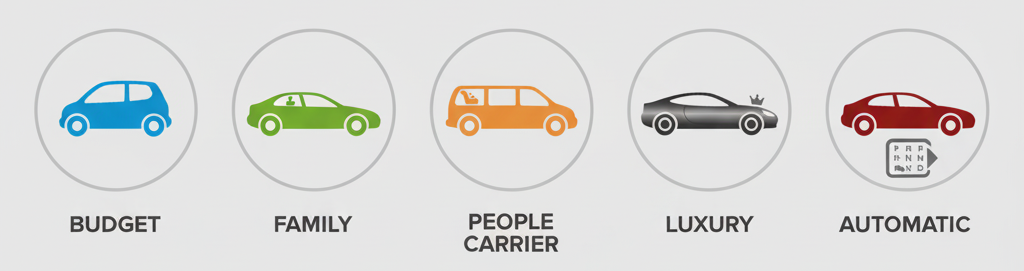
| Economy / compact | VW Up, Fiat 500, Renault Clio | £45 to £68 |
| Intermediate | Audi A3, BMW 2 Series, Skoda Octavia | £70 to £100 |
| Full size / estate | VW Passat, Mercedes C-Class, Audi A4 | £90 to £135 |
| SUV | Audi Q7, BMW X3, Volvo XC60 | £100 to £145 |
| 7 or 9-seater | Ford Galaxy, Seat Alhambra, VW Touran | £110 to £160 |
| Premium / luxury | Mercedes E-Class, BMW 5 Series | £135 to £230 |
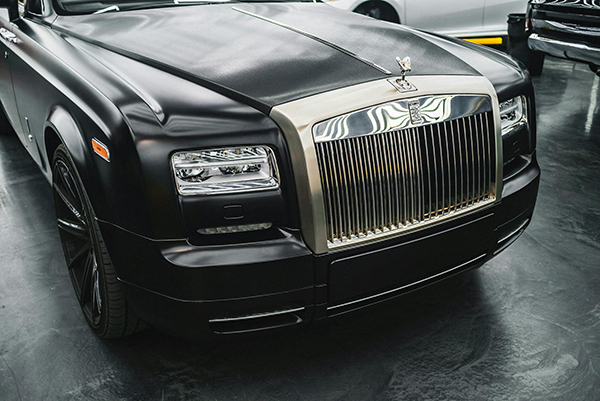
Prices are converted from Swiss francs at roughly £0.91 per CHF; check a live rate if you’re budgeting closely. Looking for something faster than the categories above? See our luxury car hire Geneva Airport guide for age, deposit and insurance rules specific to sports cars and supercars.
Flying Swiss? Check Your Airline Miles First
If you’re flying with Swiss International Air Lines, its loyalty programme, Miles & More, has a standing partnership with Europcar across Europe: discounted rates and mileage credit on qualifying rentals. It’s easy to overlook because it isn’t advertised at the Geneva desk itself.
If you already have a Miles & More number from a Lufthansa Group flight, enter it against a Europcar quote before comparing prices elsewhere; it sometimes beats the “cheapest” aggregator rate outright.
Finding the Swiss-Side Desk
The process is the same regardless of which brand you’ve booked. After baggage reclaim, stay on the Swiss side and follow the signs to the on-site rental car counter, where you check in and sign the contract. From there, a shuttle takes you to the P51 car park to collect the vehicle itself. If you’re driving to it directly, the GPS address is Geneva Airport (Swiss side), Parking P51, 1215 Meyrin.
Which Supplier, and What’s Actually Different
Most Swiss-side suppliers use the same arrivals-hall check-in and the same P51 pickup, so the real differences are fleet, price and a handful of desk-sharing arrangements rather than location.
| Supplier | Note |
|---|---|
| Avis | Individual arrivals-hall desk, Swiss sector |
| Budget | Individual arrivals-hall desk, Swiss sector; commonly run alongside Avis by the same operator, so fleets and terms often mirror each other |
| Europcar | Individual arrivals-hall desk, Swiss sector; the one to check first if you hold Miles & More or another Star Alliance-linked loyalty number |
| Hertz | Individual arrivals-hall desk, Swiss sector |
| Sixt | Individual arrivals-hall desk, Swiss sector |
| Enterprise, National and Alamo | Share a single desk on the Swiss side; check your confirmation to see which brand name your booking is actually under |
| Thrifty | Individual arrivals-hall desk, Swiss sector; frequently the lowest headline rate on comparison sites, so check the mileage cap and deposit carefully against the total |
Exact opening hours shift by season, so use the hours on your own booking confirmation rather than a number you find elsewhere online: they go stale fast on comparison sites. Accelerated or online check-in is worth activating in advance where the supplier offers it, since it cuts the counter time down to handing over your licence and card.
Counter Upsells Worth Knowing About in Advance
None of these are scams exactly, but they’re priced to be sold at the counter when you’re tired and want to get moving, so it’s worth deciding in advance rather than on the spot.
- Excess/damage waiver upgrade. The standard CDW usually leaves a real excess of several hundred to a few thousand francs. A third-party excess insurance policy bought before you fly is very often cheaper than the desk upgrade for the same protection; it’s worth pricing both before you land.
- Additional driver fee. Adding a second driver at the counter typically costs more than adding them online during booking. If you know a second person will drive, add them at the booking stage.
- Young driver surcharge. Drivers under 25 (sometimes under 23) are usually charged a daily young-driver fee on top of the base rate, separate from any age restriction on the car category itself. This is set by the supplier’s policy, not negotiable at the desk.
- Full tank on collection, full tank on return. Confirm this is the actual policy before you drive off. If it’s anything else (same-to-same, or a prepaid tank), get it written on the contract, not just told to you verbally.
Returning the Car (Swiss Side)
Returns go through the same P51 car park you collected from. Follow the “Car Rental Return” signage into P51, keep right, and enter through the gate marked with the rental company logos. Refuel before you arrive if your contract is full-to-full: the in-house refuelling charge is reliably worse value than the last petrol station on your route back.
Photograph the car at drop-off, not just at pickup, since that’s what actually resolves a damage dispute rather than a general note that you checked it. If you’re returning after the desk has closed, most suppliers have an after-hours drop process (key box, marked bay); confirm this on your contract before you land rather than discovering it at 11pm.
Crossing Into France
Swiss-side cars are Swiss-registered and can be driven into France without extra paperwork for EU and EEA drivers; the Green Card requirement was dropped for this group in 2021. What doesn’t automatically transfer is the drop-off: a Swiss-registered rental generally can’t be returned at the French-side desk without a one-way fee agreed at booking.
If your trip is genuinely Swiss-only, a Swiss-side rental is the simpler option; if you’re heading into France for most of the trip, it’s worth pricing the French side instead.
Winter Driving Basics
Winter tyres aren’t a blanket legal requirement in Switzerland, but if you have an accident on summer tyres between November and April, an insurer can reduce or reject the claim on the grounds of negligence. Swiss-side SUVs and estates are usually fitted for the season by default; confirm this if you’ve booked an economy or intermediate car for a mountain route, since it isn’t guaranteed on every category. Snow chains are mandatory only where the road is marked with the round blue chain sign, typically on alpine pass approaches.
Which Category Fits Which Trip
Staying in Geneva itself? Take the train and skip the rental entirely; see above.
Day trips around the lake or into the nearby French countryside? Economy or intermediate is plenty.
Ski week with gear for a family? Go SUV or estate over a hatchback, since boot space disappears fast once skis and boots are loaded.
Group of seven or more? Book the 7 seater or 9 seater minivan category well ahead; it’s the smallest-volume category at GVA and sells out first in ski season.
Quick Facts
| Question | Answer |
|---|---|
| Is Geneva Airport in France or Switzerland? | Both. The runway and main terminal are in Switzerland, but a section of the terminal (Secteur France) sits under French administration, with its own exit onto French soil. |
| What’s the IATA code for Geneva Airport? | GVA. |
| Can I drive a car hired in Geneva into Italy? | Yes, for EU/EEA-registered rentals, with no Green Card required since 2021. Confirm cover with the desk if you’re a non-EU licence holder. |
| How far is it to drive from Geneva to Annecy? | Around 45km, roughly 45 minutes, crossing into France. |
| Is there a fast-track passport control at Geneva Airport? | Automated e-passport gates are available for eligible EU/EEA and Swiss passport holders at Swiss-side arrivals, which speeds up the walk to the rental desk considerably at peak times. |
Sources: supplier location guidance published by Alamo, Enterprise and National for Geneva Airport; Europcar’s published airline partner list for Miles & More; the Federal Office for Customs and Border Security on cross-border insurance rules; SBB/Trainline published timetables for the Geneva Airport to Cornavin rail link; and current published rate data for Geneva Airport rental operators. Currency conversions use a live CHF/GBP rate checked at the time of writing and will drift over time.